'/> Knowledge Is Power

Thursday, January 28, 2016

Chicken & Eggplant

Hungry Girl - 5-Ingredient Meals; 350 Calories or Less!
Facebook

SmartPoints™ Reminder: Recipe values won't always match up with the SmartPoints™ calculator. Just like Weight Watchers, in recipes, we don't factor in the calories, sugar, etc., from fruits and veggies with a SmartPoints™ value of 0. (Blended beverages are the exception.) Click here for the full 411!
Hungry Girl's Healthy Naked Chicken & Eggplant Parm Recipe
Naked Chicken & Eggplant Parm
1/4th of pan (4" X 4"): 350 calories, 12g total fat (5.5g sat fat), 814mg sodium, 14.5g carbs, 6g fiber, 7.5g sugars, 45.5g protein -- SmartPoints™ value 6*

All the things you crave about chicken and eggplant Parmesan, in one big melty dish... Super yum!

Prep: 15 minutes
Cook: 1 hour and 10 minutes
Cool: 10 minutes

Ingredients:

1 large eggplant (about 20 oz.), ends removed
Four 5-oz. boneless skinless chicken breast cutlets, pounded to 1/4-inch thickness
1 cup canned crushed tomatoes
1 cup shredded part-skim mozzarella cheese
1/4 cup grated Parmesan cheese
Seasonings: garlic powder, onion powder, salt, Italian seasoning

Directions:

Preheat oven to 400 degrees. Spray 2 baking sheets and an 8" X 8" baking pan with nonstick spray.

Cut eggplant lengthwise into 1/2-inch slices. Sprinkle with 1/2 tsp. garlic powder, 1/2 tsp. onion powder, and 1/4 tsp. salt, and lay on one of the baking sheets.

Lay chicken cutlets on the other baking sheet, and sprinkle with 1/4 tsp. garlic powder, 1/4 tsp. onion powder, and 1/4 tsp. salt.

Bake eggplant and chicken for 20 minutes.

Meanwhile, to make the sauce, combine these ingredients in a medium bowl: tomatoes, 1 1/2 tsp. Italian seasoning, and 1/2 tsp. each garlic powder and onion powder. Mix well.

Remove chicken from oven.

Flip eggplant, and bake until lightly browned and mostly softened, about 12 minutes. Remove sheet, but leave oven on.

Evenly layer the following ingredients in the baking pan: 1/4th of the sauce, half of the eggplant slices, another 1/4th of the sauce, 1/2 cup mozzarella cheese, 2 tbsp. Parm, and another 1/4th of the sauce. Evenly top with cooked chicken.

Continue layering with remaining eggplant slices, sauce, 1/2 cup mozzarella cheese, and 2 tbsp. Parm.

Cover pan with foil, and bake for 30 minutes, or until hot and bubbly.

Uncover and bake until cheese has completely melted and lightly browned, about 5 minutes.

Let cool for 10 minutes before slicing.

MAKES 4 SERVINGS


Monday, November 2, 2015

2 Healthy Snacks to Appease Your Sweet Tooth

Fruit Leathers:
Ingredients:
4 cups diced fresh fruit, mango or strawberry, or a combination of both (That's it! No sugar, just 100% fruit)

Preheat the oven to 170°F.

In a food processor or blender, blend the fruit until it becomes a puree. 

Spread the mixture evenly onto a silpat-lined baking sheet.  It's very important to try to spread the fruit puree as evenly as possible, for even baking and easy rolling up. If you don't have a silpat, parchment paper will work, too.

Bake in 170°F oven for 3 hours, or until the fruit is dried out and no longer wet or sticky to the touch. Allow the dried fruit to cool.

Cut a piece of wax paper that is the same size as the rectangle of dried fruit. Lay the wax paper on top of the dried fruit, flip the silpat over, and remove it from the fruit, leaving the dried fruit on the wax paper.

Lengthwise, using a pizza cutter or a very sharp knice, cut strips of the dried fruit on wax paper. Cut the strips in any width you like.  Roll up each strip, and you have your homemade fruit roll up.

Store in an air tight container for up to a week.
Hot Chocolate:
Serves 1-2
Ingredients:
1 can light coconut milk
2 tablespoons unsweetened cocoa powder
2 tablespoons pumpkin puree (from a can, no sugar added, 100% pumpkin)
2 tablespoons organic maple syrup
1/2 teaspoon pumpkin spice

In a high-powered blender, preferably a Vitamix, combine all of the ingredients for the hot chocolate.

Transfer the mixture to a small pot and heat on the stove until hot warmed through, but not boiling, about 5 minutes. Serve hot.


Last Updated: 4/16/2014


http://www.everydayhealth.com/news/recipe-rehab-two-healthy-snacks-to-curb-your-sweet-tooth/?pos=1&xid=nl_EverydayHealthDietandNutrition_20151101

Tuesday, August 4, 2015

Protein bites

One cup peanut butter one cup of flax seed (grounded), 3/4 cup of honey and 1/2 cup dark chocolate bits. Mix together and shape into
Balls. No baking needed!!

Saturday, July 4, 2015

Arthritis

I was having a conversation with a friend and we were talking about Arthritis. I did know there are at least 100 types of arthritis.  decided to do some research and Lupus, fibromyalgia and Gout are types of Arthritis.

Arthritis (from Greek arthro-, joint + -itis, inflammation; plural: arthritides) is a form of joint disorder that involves inflammation of one or more joints.[1][2] There are over 100 different forms of arthritis.[3][4] The most common form of arthritis is osteoarthritis (degenerative joint disease), a result of trauma to the joint, infection of the joint, or age. Other arthritis forms are rheumatoid arthritis, psoriatic arthritis, and related autoimmune diseases. Septic arthritis is caused by joint infection.
The major complaint by individuals who have arthritis is joint pain. Pain is often a constant and may be localized to the joint affected. The pain from arthritis is due to inflammation that occurs around the joint, damage to the joint from disease, daily wear and tear of joint, muscle strains caused by forceful movements against stiff painful joints and fatigue.

https://en.wikipedia.org/wiki/Arthritis

Fibromyalgia syndrome affects the muscles and soft tissue. Symptoms include chronic muscle pain, fatigue, sleep problems, and painful tender points or trigger points, which can be relieved through medications.

Lupus, an autoimmune disease, happens when the immune system attacks its tissues, causing inflammation, swelling, pain, and damage. Lupus symptoms include fatigue, joint pain, fever, and a lupus rash.

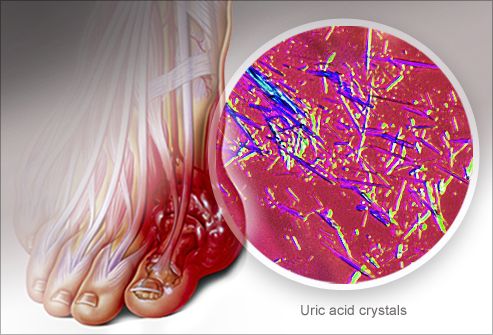
Gout is a kind of arthritis caused by a buildup of uric acid crystals in the joints. Uric acid is a breakdown product of purines that are part of many foods we eat. An abnormality in handling uric acid and crystallization of these compounds in joints can cause attacks of painful arthritis, kidney stones, and blockage of the kidney filtering tubules with uric acid crystals, leading to kidney failure. Gout has the unique distinction of being one of the most frequently recorded medical illnesses throughout history.

Thursday, June 11, 2015

Why high heels hurt so bad

Why high heels hurt so bad

Join the club. No kidding -- high heels can be hell. Check out the numbers: Women have approximately four times as many foot issues as men, according to the College of Podiatry -- something podiatrists contribute to the wearing of high heels. What’s more, a 2014 survey by The American Podiatric Medical Association (APMA) found that nearly half of all women (49 percent) wear high heels, even though the majority of heel wearers (71 percent) say the shoes hurt their feet.
Cramming your feet into pointy-toed shoes can lead to a laundry list of foot problems: calluses, hammertoes, bunions, plantar fasciitis and neuroma (a tingling, burning or numbness in the foot). Pretty, huh? And the trouble can travel up your legs. A 2012 study in The Journal of Experimental Biology found that over time, heels can tighten and shorten your Achilles tendon, leading to muscle spasms and pain.
What’s more, high heels can throw your body alignment out of whack. “Your feet are the foundation for your entire body, and when you walk in heels, you change your center of balance,” says Emily Splichal, DPM, podiatrist, human movement specialist, and author of Everyday Is Your Runway: A Shoe Lover’s Guide to Healthy Feet & Legs. When you slip into a pair of high heels, Dr. Splichal says, your feet slide forward into the shoe. “The increased weight on the balls of your feet causes your pelvis to tilt forward,” she explains. To compensate, you lean backwards, increasing the arch in your lower back, which puts a strain on your lumbar spine, hips, and knees. The higher the heels, the greater the strain.

Your guide to pain-free heel-wearing

Of course, for a lot of women (for example, those at the mercy of the Cannes Film Festival fashion police), it’s hard to avoid heels altogether. And then there are those who don’t mind suffering for the sake of fashion. So here’s how to keep the shoes while minimizing the damage.
Go lower. “Stick with heels that are 3 inches or less. Anything higher will change the biomechanics of how you walk, compounding the stress you put on your back and hips,” Dr. Splichal says.
Steer clear of the skinny stiletto. “A thick heel can offer stability and support, and help spread the load more evenly,” says Elena Blanco, DPM, of New Jersey’s Hackensack Center for Foot Surgery.
Be aware of your posture. “You should be wearing the heels -- the heels shouldn’t be wearing you,” Dr. Splichal says. “Be aware of how your body is positioned and counter the tilt of your pelvis by keeping a neutral stance -- shoulders back, chest out, soft knees. And resist the urge to fall on the ball of your foot by distributing weight evenly on the heels and balls of your foot.”
Try a new slant. Another way to relieve some of the pressure on the ball of your foot and toes, Dr. Blanco says: Consider a style with a gradual incline like platforms or wedges.
Change things up. “Every shoe has different stress points, so tease your heel height throughout the week to give each part of your feet a break,” Dr. Splichal says. “If you wear 3-inch heels one day, switch to a 2-inch heel the next, then try a flat.” Another way to give your feet a break, per Dr. Blanco: “Tuck your heels in your bag and wear flatter, comfier shoes when walking to and from work or to a big event. Then swap the shoes when you arrive at your destination.”
Look for softer soles. Cushioning inside shoes acts as a kind of shock absorber, lessening the impact of your foot hitting the pavement and reducing the strain on your knees, says Dr. Blanco, who recommends comfy brands such as Clarks, Ecco, and Cole Haan (which employs Nike Air cushion technology). Slip thin gel or foam cushions into high heels you already own to cover and protect the area around the ball of your foot. Try Dr. Scholl’s Dream Walk Ball of Foot Cushions.

How to undo the damage

Yep, heels can affect your feet, hips, and back -- but you can prevent pain with a few simple moves:
Work the hips. “The more flexible your hips are, the better you’ll be able to tolerate the stress that heels put on your body,” says Dr. Splichal. “Keep them limber by doing at least five minutes of hip flexor stretches before and after putting on high heels.”
Whip out a golf ball. And roll it under the ball, arch, and heel of your foot for five minutes in the morning and evening. This feel-good move massages feet and keeps them flexible.
Step it up. Stand on a step barefoot, letting your heels extend off the edge. With your weight on the balls of your feet, lower your heels down as far as you can, then rise up on your toes and slowly return to the starting position. Repeat for about 30 reps.
Flex your toes. Sit barefoot in a chair and loop a towel under the toes of your foot. Pull up gently on the ends of the towel, pulling your toes toward your chin. Repeat 10 times on each foot.
Write the alphabet. To strengthen your ankles and improve range of motion, use your big toe to trace each letter of the alphabet in cursive in the air, moving only the foot and ankle.
Make like a monkey. Place about 20 binder clips on the floor. Using your toes, pick up one at a time and drop it into a cup. This will stretch the bottoms of your feet.
What High Heels Are Really Doing To Your Body was originally published on Health.com.
More from Health.com.

Wednesday, May 20, 2015

Coffee Lovers

Harmful bacteria may be lurking in your single-serve coffee machine

Illness-causing bacteria may be hiding in your beloved single-serve coffee machine. (Keurig Green Mountain)
There's some bad news for coffee lovers brewing their morning joe with a single serve coffee maker.
According to a swab test conducted by KDKA-TV in Pittsburgh, over 4 million colonies of  harmful bacteria and mold was founding lurking in the water tank, coffee pod compartment, spout and tray on more than half of the 28 machines tested.
The station says it tested eight machines in Pittsburgh and another 20 in Chicago and Dallas and found strains of bacteria like E.coli, staphylococcus, streptococcus and pseudomonas aeruginosa.
“I thought you would find something, but not something that could make us sick,” coffee machine owner Stephanie Brink told KDKA.
According to the National Coffee Association, about 27 percent of consumers own single-serve brewers, such as Keurig or Nespresso.  But many people forget to clean their machines on a regular basis.
"Coffee makers are certainly a moist environment where mold and bacteria are known to grow in high numbers.  Our bodies can deal with them, but at some point they'll grow to levels high enough to cause sickness," Kelly Reynolds, a microbiology specialist at the University of Arizona told Consumer Affairs.
Keurig told KDKA that if a machine has not been used for several days, it is important to run “several cleansing brews to remove any internal standing water.”
Here are some other steps to prevent mold or bacteria from collecting in your coffee machine:
--Clean your machine regularly
--Run vinegar through it to help sanitize surfaces
--Use filtered water rather than water straight from your tap
--Change the water after each use
--Leave the lid off to allow the machine to air out
--Wipe the machine down daily

http://www.foxnews.com/leisure/2015/05/19/harmful-bacteria-may-be-lurking-in-your-k-cup-coffee-machine/?icid=maing-grid7%7Cmain5%7Cdl25%7Csec1_lnk3%26pLid%3D1572178082

12 Scientific Health Benefits of Turmeric and Curcumin

 By Lauren Bedosky Medically Reviewed by Kelly Kennedy, RD Last Updated: 9/16/2019 There’s no shortage of health claims ab...